
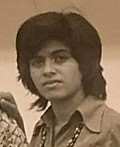
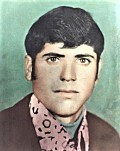
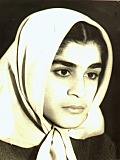
In 1979 a revolution took place that changed the fate of millions of Iranian citizens
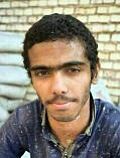
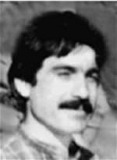
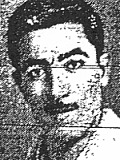
A practicing doctor in 1979…
...He was arrested in his hometown shortly after the revolution. A former cellmate recalled: "He was well- spoken, warm-hearted, and brave.
A practicing doctor in 1979…
...He was arrested in his hometown shortly after the revolution. A former cellmate recalled: "He was well- spoken, warm-hearted, and brave. He had started his own medical clinic and, at the same time, had become a deputy in the parliament. He told me that he had barely escaped execution, had forfeited everything he owned, and had been condemned to a one-year exile. He said that they had sent him to Tehran to determine where he would finish his sentence. ... He talked about everything with simplicity, ease, and joy... 'I lost everything once before ... This time is no different. I'll start again.'" Yet, it was not to exile but to the 'Execution Corridor' that the revolutionaries sent him.
more...
close...
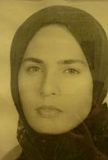
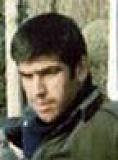
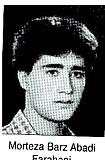
A nurse in Iranian Kurdistan in 1980…
...She encouraged two French journalists to report on the "butchery" they had witnessed.
A nurse in Iranian Kurdistan in 1980…
...She encouraged two French journalists to report on the "butchery" they had witnessed. She hoped that international intervention would stop the Iranian army from shooting at ambulances and would allow the delivery of urgently needed medical supplies. She was arrested and charged with making "counter-revolutionary" comments published in a foreign newspaper. Executed on June 17, she was thirty years old.
more...
close...
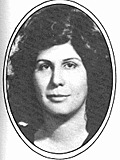
A young girl in Tehran in 1981…
...Arrested for swimming in her home pool in a bathing suit,
A young girl in Tehran in 1981…
...Arrested for swimming in her home pool in a bathing suit, she was found guilty of causing "a state of sexual arousal" in a neighbor from whose house she could be seen. She was sentenced to sixty lashes in April 1981, but she died after the thirtieth lash.
more...
close...
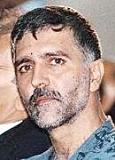
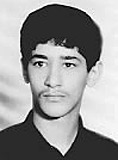
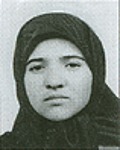
A lawyer and a political prisoner during the summer of 1988...
...He had languished in a Tehran prison for years solely for his political beliefs when he was called before a "Death Committee."
A lawyer and a political prisoner during the summer of 1988...
...He had languished in a Tehran prison for years solely for his political beliefs when he was called before a "Death Committee." They asked him whether he was a Marxist or a Muslim. He referred them to their own constitution, which prohibits inquisition into one's beliefs. They told him that they did not need lessons and ordered his execution. He, like thousands of others who died in the summer and fall of 1988, was punished for resisting torture and refusing to embrace the State's ideology.
more...
close...
A woman in love in 1994…
...She was found guilty of adultery. On February 1, she was buried up to her breasts in Tehran and stoned to death, slowly.
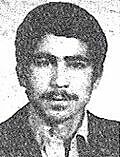
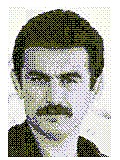
A fifty-two-year-old salesman in 1998…
...He believed in the Baha'i religion. In the eyes of the State, this made him an apostate, a member of the "unprotected infidel" community.
A fifty-two-year-old salesman in 1998…
...He believed in the Baha'i religion. In the eyes of the State, this made him an apostate, a member of the "unprotected infidel" community. Arrested and found guilty of converting a woman to the Baha'i faith, he was hanged in a public square in Mashad on July 21.
more...
close...
A writer in 1998…
...He had protested censorship and translated the Universal Declaration of Human Rights and
A writer in 1998…
...He had protested censorship and translated the Universal Declaration of Human Rights and a book entitled Human Rights: Questions and Answers into Farsi. His wife and daughter never saw him alive after he left for work one winter morning. The day of his execution had been chosen carefully; his body was found on December 10, 1998, the day his book was released, and the 50th anniversary of the Universal Declaration of Human Rights.
more...
close...
A photographer in 2003 …
...A single mother, she had struggled to raise a child and to build a career in exile.
A photographer in 2003 …
...A single mother, she had struggled to raise a child and to build a career in exile. Her son remembers her as a small but feisty and courageous woman who loved freedom. She left her son for a business trip to Iran and Afghanistan. She was arrested while photographing a group of people inquiring about their detained loved ones. She was interrogated and beaten for refusing to confess to being a spy. She died in a military hospital in Tehran on July 10.
more...
close... Search for a citizen of Omid
|
|

A Description of Omid
The men and women whose stories you can read on this page are now all citizens of a silent city named Omid ("hope" in Persian). There, victims of persecution have found a common life whose substance is memory.
Omid's citizens were of varying social origins, nationalities, and religions; they held diverse, and often opposing, opinions and ideologies. Despite the differences in their personality, spirit and moral fiber, they are all united in Omid by their natural rights and their humanity. What makes them fellow citizens is the fact that one day each of them was unfairly and arbitrarily deprived of his or her life. At that moment, while the world watched the unspeakable happen, an individual destiny was shattered, a family was destroyed, and an indescribable suffering was inflicted.
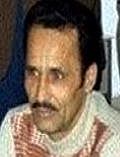
If you wander around this city, you will realize that, through their common ordeal, the citizens of Omid have created another Iran, an imaginary Iran: a democratic polity, pluralistic and diverse, where citizens posthumously enjoy their human rights.
Visit Omid, meet its citizens, and, by doing so, bring them back in memory. Let them challenge our conscience so that in the future we will prevent this kind of tragedy from happening again. |
|